Repair economy: Does fast fashion want to teach us how to sew?
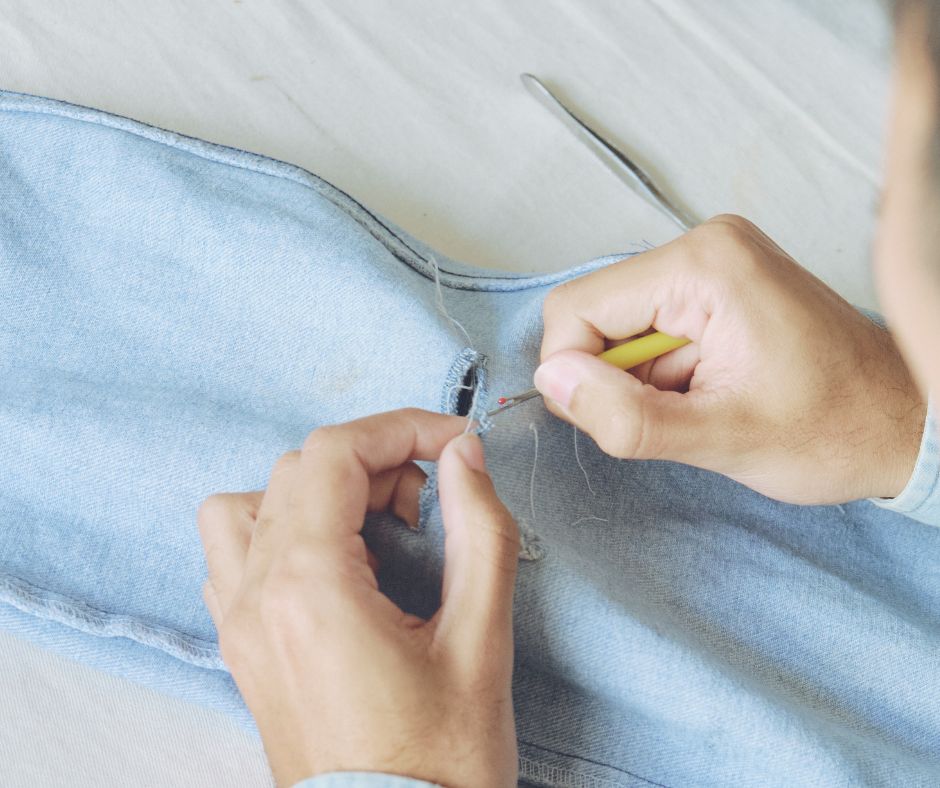
From mending to sewing education workshops: repair is moving beyond the slow fashion niche and into the mainstream. Is this the beginning of a more circular fashion trend or just another service added to a model based on continuous production? From niche practice to mainstream service: Levi’s, Uniqlo, Zara, and Primark are teaching consumers how to repair, mend, and care for their clothes. Can repair change the fashion economy? In recent years, mending, tailoring, visible mending, and clothing care have moved beyond slow fashion circles and into major brand stores. An Associated Press investigation (From Uniqlo to Zara, clothing brands try to win over Gen Z with a needle and…
Where Is Fast Fashion Now? Between accusations of greenwashing, European regulations, and a model that (still) endures
From Shein to Zara: What’s Really Changed—and What Hasn’t In 2026, fast fashion isn’t dead, but it’s under pressure like never before. In recent years—and with increasing intensity in recent months—the industry has entered a phase of systemic scrutiny: regulatory, media, and cultural. Yet, despite investigations, accusations of greenwashing, and new European regulations, the major players continue to grow, adapting faster than the criticism they receive. The two faces of fast fashion: under accusation, but expanding Brands like Shein and Temu have redefined the speed of the system, taking it to the next level: ultra-fast production, extremely low prices, and global digital distribution. Their model—often referred to as ultra-fast fashion—has…
Vulnerability and Choices: What It Really Means to Build a More Responsible Brand – Eyelet Milano
There’s a word that often gets left out of fashion storytelling: vulnerability. And yet, it’s precisely there that the most important choices come from. For brands, but also for people. Being vulnerable doesn’t mean being fragile. It means exposing yourself with clarity, acknowledging what doesn’t work, accepting that not everything can be done as you’d like. It’s a form of honesty. It’s a less visible, yet profoundly human, place. It’s where you no longer seek perfection and instead begin to see things for what they are. In the fashion system, this is even more difficult. Because the dominant narrative demands absolute coherence, strong identities, clear positioning. It demands success and…
The man who wore Dior now wears Zara. Should we be happy?
John Galliano returns to the atelier. But the collaboration with the Spanish giant Inditex raises questions that the press release hasn’t yet answered. In January 2026, in Paris, a women’s dress designed by John Galliano for Dior sold at auction for € 637,500. A few weeks later, the same designer announced he would be working for Zara. Not for a six-piece capsule collection to be photographed on Instagram—for two years, with seasonal collections, drawing on the Spanish brand’s archive. If you had a strange feeling reading these two sentences one after the other, that’s understandable. It doesn’t necessarily mean it’s wrong. It means it’s complicated. And complicated things deserve to…
Recycled polyester releases more microplastics
When the sustainable solution may make the problem worse. In recent years, recycled polyester has become the symbol of “eco-friendly” fashion: promoted as a virtuous alternative to virgin polyester, it has been adopted by dozens of global brands as a strategy to reduce the industry’s environmental impact. However, a recent scientific study raises serious doubts about the true sustainability of this fiber and challenges a previously widespread and little-examined narrative. The results of the “Spinning Greenwash” study The Changing Markets Foundation, a nonprofit organization working on environmental sustainability, commissioned research from the Microplastic Research Group at Çukurova University (Turkey) to compare the release of microplastics between recycled and virgin polyester…
Shein Paradox in France: Online Shop Suspended
Shein opened its first permanent store in France, inside the BHV Marais, a central Paris institution, on November 5, 2025. On the same day, the French government announced the initiation of a procedure to suspend access to Shein’s online site until it demonstrates full compliance with national laws. The decision came after the French consumer watchdog (DGCCRF) discovered disturbing ads on the Shein marketplace: sex dolls with “child-like” features and even prohibited weapons, such as machetes and large knives. In response, Shein announced a global ban on the sale of sex dolls on the platform, temporarily suspended the “adult products” category in France, and took action against the responsible sellers.…
Gucci, Chloé, and Loewe sanctioned by the European Commission: what this means for sustainable and ethical fashion
On October 14, 2025, the Commission fined three major luxury brands—Gucci, Chloé, and Loewe—a total of €157 million (approximately US$182 million) for restrictive practices regarding retail price revaluation. According to the Commission, the three brands imposed conditions on their independent retailers that limited their pricing autonomy (both online and in-store), defining maximum discounts, predetermined sales periods, or even prohibiting certain discounts. Gucci received the highest fine (approximately €119.7 million), Chloé about €19.7 million, and Loewe €18 million. The fines were reduced thanks to the brands’ cooperation with investigators. Why it matters For the first time in the luxury fashion sector, the Commission highlights that price-control practices can constitute a violation…
Luxurywashing: Does luxury rhyme with ethics?
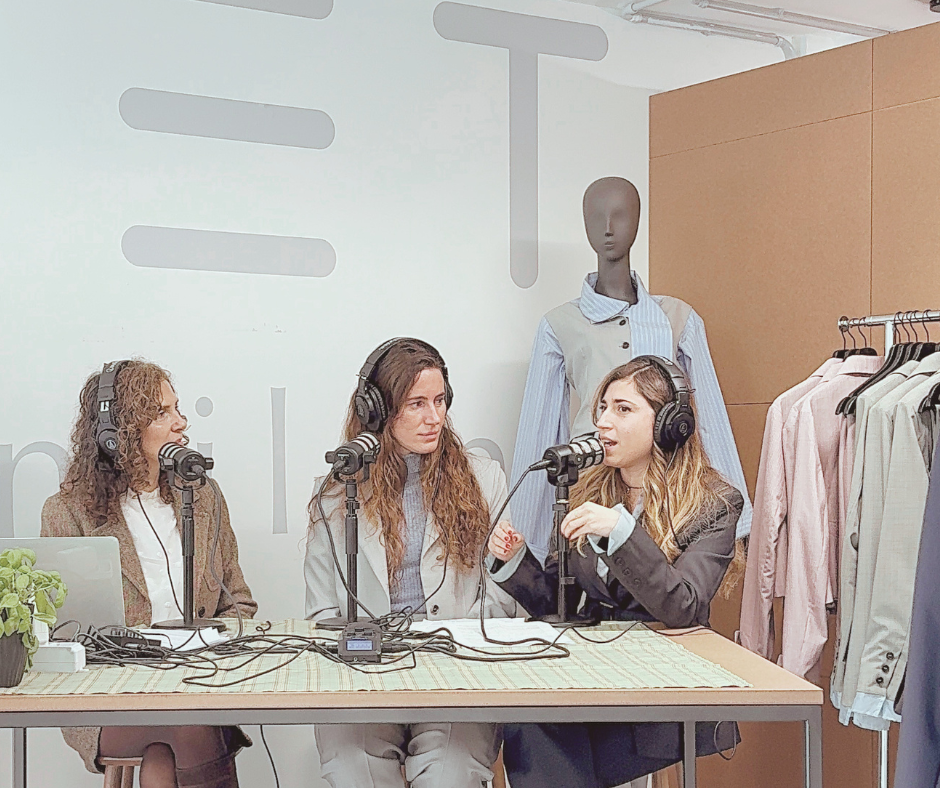
If we were to ask those who buy designer clothes worth thousands of euros whether they believe these products are more sustainable, many would likely say yes. The high price is often interpreted as a guarantee of quality, traceability, and respect for labor rights. However, the recent scandal involving Loro Piana—a historic Italian cashmere brand under investigation for labor exploitation—undermines this belief. And it’s not an isolated case. Max Mara, Dior, Armani, Valentino are among other luxury brands recently implicated in cases of poor labor conditions. It points to a deeper issue. In this article-podcast, we explore the phenomenon of luxurywashing—the construction of a “green and ethical” image that masks…
“You’re Obese”: The Dark Tale of the Workers Behind the Glitter
When fashion forgets who sews it In the 1960s and 1970s, female textile workers in Reggio Emilia went on strike in major factories like Confit, Bloch, Maska, Max Mara, and not just for wages. They demanded rights over their bodies, their health, their time. They worked in environments saturated with fibers, standing for hours, with night shifts that left no room for motherhood, life, dignity. Those women, often invisible in the union narratives of the time, brought a new urgency to the heart of the factories: the struggle was not just economic. It was existential. In cases like Max Mara, the workers demanded recognition of the trade unions and national…
Silk waste between innovation and sustainability: interview with Cosetex
Silk is synonymous with luxury and glamour, but did you know that it can also be an innovative and environmentally friendly material? In the new episode of our podcast, we interviewed Silvio Mandelli, CEO of Cosetex, a company with over 120 years of experience in the recovery of silk waste. Cosetex has revolutionized the industry by transforming what was once considered waste into new opportunities: natural padding, high-quality yarns and collaborations with the denim world. Silvio tells us about the environmental benefits of silk, such as its ability to capture CO2 and the fact that it does not produce plastic microfibers. But what does “silk waste” really mean? How did…